
It is one of the most common concerns we hear from parents when starting music lessons.
“My child enjoys their lesson, but at home they just will not practise.”
If this sounds familiar, please know you are not alone. It is also not a sign there may be something wrong with the lessons, or that your child is lazy, unmusical, or incapable of learning piano.
We have found that when practice becomes a struggle, it is usually not a character issue. It is a structure issue.
Let us look at what may really be happening, and how the right approach can completely change the experience at home.
Why Children Avoid Practising
For many children, traditional piano practice can feel:
-
Lonely – sitting at the piano without feedback
-
Uncertain – not knowing if they are playing correctly
-
Overwhelming – unsure where to begin
-
Externally driven – practising only because a parent tells them to
Children aged 5 to 12 thrive on clear goals, small wins, and immediate feedback. When those elements are missing, motivation fades quickly.
Often, the resistance parents see at home is not about discipline. It is about design.
When Practice Turns Into Pressure
Many well-meaning parents find themselves in a cycle of reminders:
“Have you practised yet?”
“Go and do your piano before dinner.”
“Your teacher will be disappointed.”
Over time, learning the piano becomes associated with tension instead of enjoyment. Even children who once loved music can begin to withdraw.
So we began asking ourselves an important question.
What if practice did not rely on constant parental supervision?
What if children wanted to practise because they could see themselves improving?
How Piano Express Addresses This Challenge
This is exactly why the Piano Express was created.
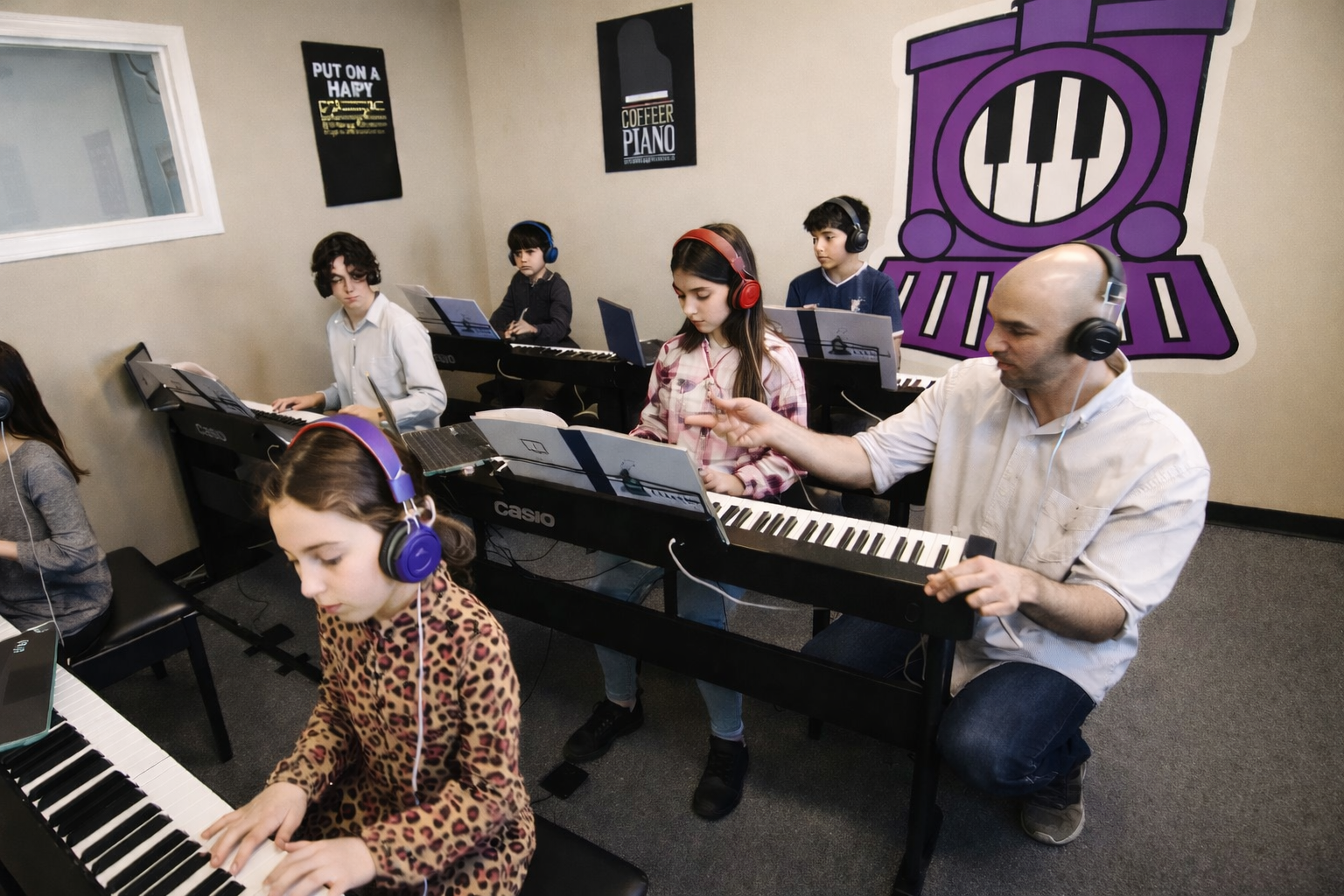
Piano Express is a carefully structured group piano program for beginners and early-intermediate students. It combines technology with expert teaching to help children become independent, motivated learners.
Here is how it changes the practice experience.
1. Immediate Feedback Builds Confidence
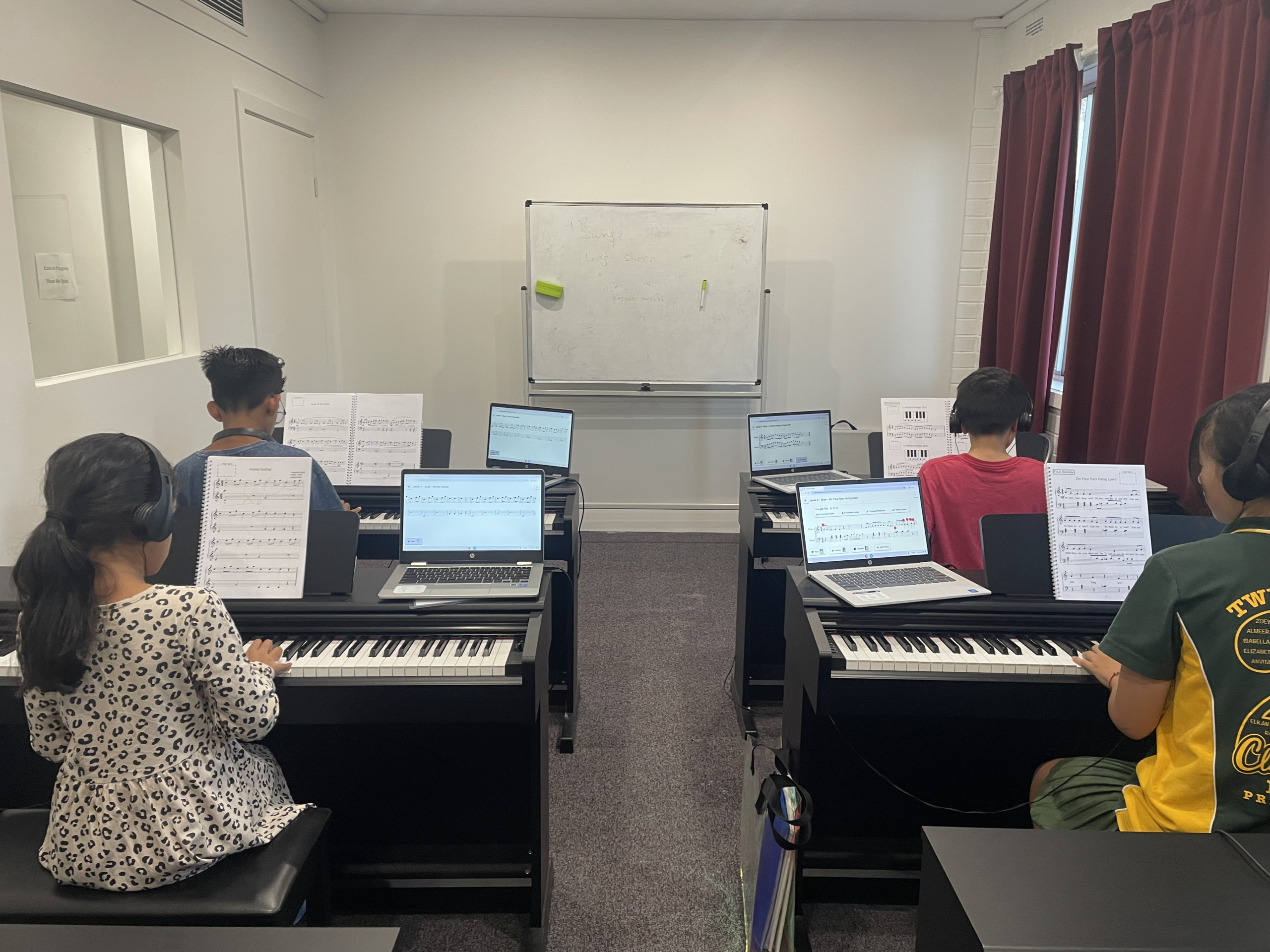
In the Assessment Class component, students practise using guided software that provides instant feedback on rhythm, accuracy, and timing.
Instead of guessing whether they are doing it correctly, children can see their results straight away. They earn stars and rewards as they improve.
This transforms practice from uncertainty into clarity. When children know they are progressing, they are far more willing to keep going.
2. Clear Goals Create Motivation
Every student in Piano Express knows what they are working towards.
They understand:
-
What they need to practise
-
What success looks like
-
What the next step will be
Progress is visible. Achievements are measurable. Children develop pride in their own improvement.
When pride replaces pressure, practice begins to happen more naturally.
3. The Group Environment Encourages Growth
Some parents initially hesitate about group classes. We understand this.
However, when group learning is structured well, it becomes a powerful motivator. At the Cantabile School of Music, our Piano Express classes are capped at six students. Each child progresses at their own level while being part of a supportive musical community.
Seeing peers work, achieve, and improve creates positive encouragement. Children realise they are not learning alone.
4. Teachers Remain Central
Technology supports learning, but it does not replace the teacher.
Our teachers guide, encourage, and adjust each student’s learning carefully. In the Discovery Class, students explore musical understanding, listening skills, rhythm, and creativity together.
This balance keeps lessons engaging and meaningful. When lessons feel purposeful, practice feels like continuation rather than obligation.
What Parents Tell Us
After joining Piano Express, many parents share similar feedback:
“I do not have to nag anymore.”
“My child practises without being asked.”
“They are proud to show me their progress.”
“Practice time feels calmer in our home.”
This shift happens because motivation becomes internal. Children practise not to avoid reminders, but because they can see and feel their growth.
Perhaps the Issue Is Not Your Child
Most children are capable of practising when:
-
The steps are clear
-
The feedback is immediate
-
The goals are achievable
-
The environment feels supportive
In our experience, it is rarely about willpower. It is about providing the right framework.
A Thoughtful First Step
Every new student begins with a one-to-one introductory assessment. This allows your child to experience Piano Express in a relaxed and encouraging setting, while we ensure the program is the right fit.
There is no pressure. Simply an opportunity to see whether learning piano can feel different.
At the Cantabile School of Music, we believe music education should nurture skill, independence, confidence, and joy.
If “my child doesn’t practise piano” has become a regular frustration in your home, perhaps the solution is not more reminders, but a better system.
We would love to welcome your family and show you how Piano Express by Cantabile School of Music can help practice become progress.
continue reading
Related Posts
Piano Express – A gamified approach to learning piano Learning piano one-on-one does not suit all students. At the Cantabile School of Music, our Piano Express program offers a fresh, exciting approach that helps beginners
It’s important to make sure that a student has the right sized instrument for their learning. Often when a student does not have the right size, it could lead to bad posture, bad technique and